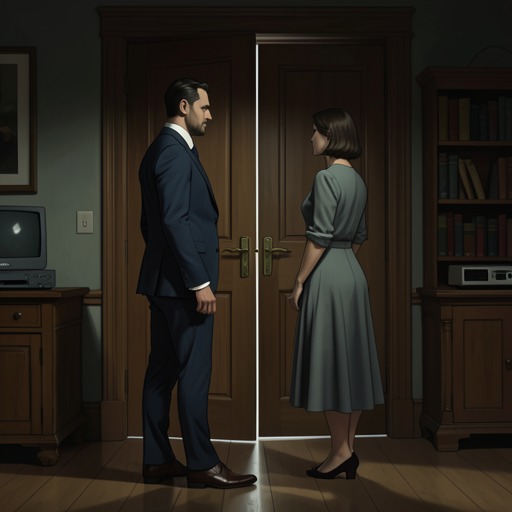
Giuseppina’s miscarriage
The Florios of SicilyGiuseppina’s miscarriage is a domestic crisis that exposes the unequal and damaged relationships inside the Florio household. The pregnancy is unwanted and emotionally alien to her; after Paolo insists on intimacy despite her refusal, she suffers a loss while exhausted by household labor. Ignazio responds with immediate care, while Paolo’s recognition of what he failed to see comes only after the midwife has said nothing can be done.
Pregnancy and household strain
Giuseppina’s pregnancy unfolds amid work that leaves little room for rest. She sweeps floors, makes beds, prepares vegetables, scrubs pans, and handles laundry, even as fatigue and pain increase. When a sharp pain makes her stop with a hand on her belly, she is caught between religious teaching that children are sent by God and a private sense that this child does not feel like hers. She tries to persuade herself that time will make her accustomed to the pregnancy and restore her feelings of motherhood.
Her uncertainty follows a night in which Paolo presses her for intimacy. Giuseppina tells him she is tired and pushes his hand away; he nevertheless takes her to the bedroom. The episode places the pregnancy within a marriage where her refusal does not protect her from his demands. The next morning, her pain and growing exhaustion are not recognized as signs of danger until the loss is underway.
The loss and immediate response
Vittoria notices the dark stains on Giuseppina’s skirt and calls attention to them. Giuseppina realizes she is bleeding and collapses before she can do more than ask for the midwife. Vittoria runs through the rain to find Mariuccia, the midwife from Bagnara. When she tells Ignazio what has happened, he turns pale, shelters her under his cloak, and hurries with her back to Piano San Giacomo, sending word for Paolo to come home.
Mariuccia reaches Giuseppina first. She confirms to Ignazio that Giuseppina was pregnant and that there is nothing to be done. Ignazio lifts Giuseppina and carries her despite her concern that his clothes will be soiled. She clings to his shirt and tells him that he is the one who is there for her, not Paolo. After helping her onto the bed, Ignazio takes her hand and kisses her palm before leaving, concealing his distress from the midwife.
Paolo’s recognition and Giuseppina’s silence
When Paolo returns, Vittoria is cleaning the floor. She tells him that Giuseppina has been ill for days, vomiting and constantly tired, and asks whether he had noticed. Her grave account makes him recognize how much he had missed. He connects her illness to her earlier resistance, and understands that he had insisted on intimacy without knowing—or attending to—the condition she was in.
Paolo approaches Giuseppina with regret and asks why she did not tell him. He tries to console her by saying the lost child might have been another boy and that it was not meant to be. Giuseppina remains motionless, staring at the wall. Unlike Ignazio, Paolo receives no words of forgiveness or apology; her silence leaves the exchange without reconciliation.
Significance within the family
The miscarriage divides care from authority. Paolo is Giuseppina’s husband, but Ignazio is the person who acts when she is in crisis and the person she identifies as present for her. Vittoria, too, sees what Paolo has not: her warning and account of Giuseppina’s recent symptoms force him to confront his inattention. The episode makes the consequences of domestic power visible through a sequence of missed signs, urgent care, and belated understanding, without suggesting that remorse repairs the harm.
It also sharpens the contrast between Giuseppina’s religious belief and her unchosen feelings. She fears that harming the child would be sinful, yet experiences the pregnancy as alien rather than as a bond she can simply will into being. The loss does not resolve that conflict; it leaves her in grief and silence, with Paolo’s regret arriving only after the midwife has declared the outcome irreversible.